Click here to return to the education section and read our other articles:
Back to EducationClick below to learn about our fundraising campaign to fund work relating to women's health:
Our Campaign
Invested in Her
Funding the science that closes the gap in women's health, menopause, and ovarian aging research.
Learn More →
As we continue exploring the connection between women’s health and longevity, our latest SLIC article turns to an important and often overlooked condition: endometriosis.
For millions of people, endometriosis is far more than a difficult period. It can mean persistent pelvic pain, fatigue, digestive or urinary problems, pain during intimacy, fertility challenges, symptoms severe enough to disrupt work, education, exercise, relationships and everyday life. Yet, many spend years being told that what they are experiencing is “normal.”
Endometriosis is a common, long-term condition, but it remains widely misunderstood.
What is endometriosis?
Endometriosis occurs when tissue similar to the lining of the uterus forms outside of it. These areas of tissue, called lesions, can trigger inflammation, irritation and the formation of scar tissues (bands of tissue that may cause organs to stick together) [1,2].
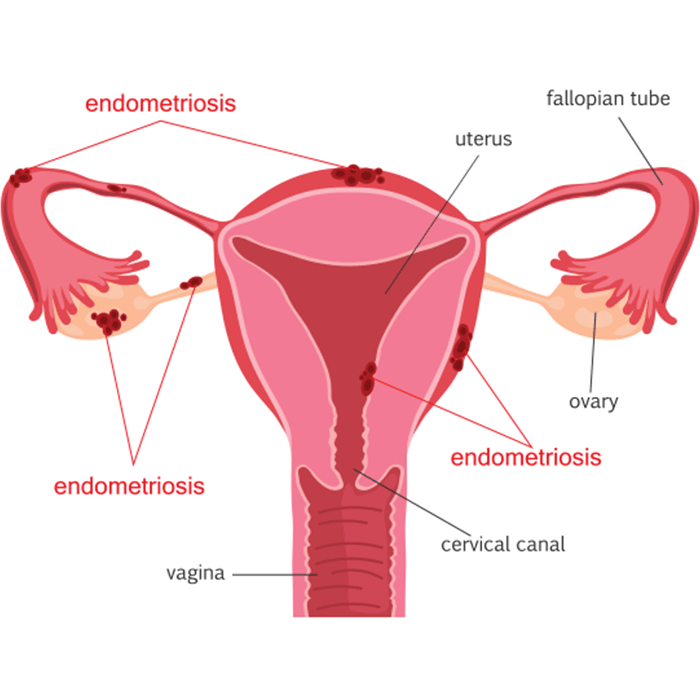
Common sites of pelvic endometriosis. Endometriosis lesions may develop on the ovaries, fallopian tubes, the outer surface of the uterus and the tissue lining the pelvic cavity. They may also affect nearby organs, including the bowel and bladder. Graph created with the assistance of ChatGPT (OpenAI).
Lesions are most often found in the pelvis, including on the ovaries, fallopian tubes, and the tissue lining the pelvic cavity. They may also affect the bowel, bladder, or ureters, which carry urine from the kidneys to the bladder. In rare cases, endometriosis can occur outside the pelvis, including around the diaphragm or in the chest [1,2].
More common than many people realize
The World Health Organization estimates that endometriosis affects around 10% of women of reproductive age, approximately 190 million people worldwide [1].
Symptoms often begin during adolescence or early adulthood, but diagnosis may come much later. A recent systematic review found that reported diagnostic times ranged from a few months to 12 years, depending on the country, population and definition used [3].
Why does it take so long? One reason is that severe period pain is still frequently dismissed as normal. Endometriosis symptoms can also resemble irritable bowel syndrome, bladder conditions or other causes of pelvic pain. In addition, routine examinations and scans do not detect every form of the disease.
Pervasive gaps only research can solve
Endometriosis research is expanding, but important gaps remain. There is still no approved routine blood, urine, or saliva test that can diagnose the disease. Better non-invasive biomarkers could shorten the long journey to diagnosis.
Researchers are also working to understand whether endometriosis includes several biologically different subtypes. This could explain why one treatment works well for one person but not another.
Other priorities include better non-hormonal pain treatments, therapies that preserve fertility, more accurate imaging, ways to predict who will benefit from surgery and more personalized care.
More than period pain
The symptoms of endometriosis vary greatly. Some people experience pain mainly around menstruation, while others have symptoms throughout the month.
Common symptoms include:
- periods that are extremely painful or interfere with normal activities;
- ongoing or recurring pelvic pain;
- pain during or after intimacy;
- painful bowel movements, constipation, diarrhea, bloating or nausea;
- pain when urinating or urinary symptoms linked to menstruation;
- heavy or irregular bleeding;
- lower-back or abdominal pain;
- persistent fatigue;
- difficulty becoming pregnant.
Endometriosis can affect almost every part of a person’s life. Unpredictable pain may lead to missed work or education, cancelled plans and reduced physical activity. Pain during intimacy can affect relationships. Fertility concerns, repeated medical appointments and the feeling of not being believed can create additional emotional strain.
People with endometriosis report higher levels of anxiety, depression and reduced quality of life [4]. This does not mean that endometriosis is psychological. It is a physical disease, but living with chronic pain and uncertainty can understandably affect mental wellbeing.
Importantly, the amount of pain does not reliably show how extensive the disease is. Someone with a few small lesions may have disabling symptoms, while another person with more widespread endometriosis may experience relatively little pain [2,5].
What causes it?
There is no single proven cause of endometriosis. Scientists increasingly believe that it develops through a combination of genetic, hormonal, inflammatory and immune-system factors [2,5].
Some aspects are well supported by evidence. Endometriosis can run in families, suggesting a genetic susceptibility. The disease is influenced by hormones, particularly estrogen, and is associated with changes in inflammation and immune activity.
Other explanations remain under investigation.
One of the best-known theories is retrograde menstruation, in which menstrual fluid flows backwards through the fallopian tubes into the pelvis. This may carry cells capable of forming lesions. However, retrograde menstruation happens in many people who never develop endometriosis, so it cannot be the full explanation.
How is endometriosis diagnosed?
Assessment usually begins with a detailed conversation about symptoms: when pain occurs, whether it affects daily life, and whether bowel, bladder, sexual or fertility symptoms are present.
A clinician may perform an abdominal or pelvic examination, although the examination can be completely normal even when endometriosis is present [6].
Ultrasound is commonly used to look for ovarian endometriomas and deeper forms of the disease. MRI may provide more detail when endometriosis involving the bowel, bladder or other structures is suspected.
However, a normal ultrasound or MRI does not rule out endometriosis. Smaller or superficial lesions may not be visible, and the accuracy of imaging depends partly on the experience of the person performing and interpreting it [6,7].
Laparoscopy is keyhole surgery that allows a surgeon to look inside the pelvis and, where appropriate, remove or biopsy suspicious tissue. It was once considered essential for confirming every diagnosis. Current guidelines recognize that symptoms and specialist imaging may provide enough evidence to begin treatment without invasive surgery in many cases [6,7].
Having said that, new technologies could soon make endometriosis easier to identify. In July 2026, the UK’s National Institute for Health and Care Excellence (NICE) published draft guidance supporting the early use of two non-invasive tests within the NHS while further evidence is collected [8]. Endotest analyzes tiny regulatory molecules called microRNAs in saliva, while EndoSure uses sensors placed on the abdomen to measure patterns of electrical activity in the gut.
These tests may help assess people whose symptoms suggest endometriosis even though an examination or scan has not provided a clear answer. However, they are still being evaluated and are not yet replacements for specialist imaging or laparoscopy. NICE has proposed a three-year evidence-gathering period to establish how accurately and effectively they work in everyday healthcare.
Treatment: finding the right combination
There is currently no treatment that cures endometriosis reliably for everyone. Care should be tailored to the person’s symptoms, priorities, age, fertility plans, and responses to previous treatments [1,7].
- Pain-relieving medicines, including anti-inflammatory drugs such as ibuprofen, may help control symptoms. However, they do not remove lesions and may not be sufficient for severe or persistent pain.
- Hormonal treatments aim to reduce ovulation, menstruation or the hormonal stimulation of lesions. Options include combined contraceptive pills, progestogen-only treatments, hormonal intrauterine devices and medicines that more strongly suppress estrogen activity.
- Surgery can remove visible lesions, release adhesions and treat ovarian endometriomas. It may improve pain or fertility in selected patients. However, endometriosis can return, and surgery does not guarantee that all pain will disappear. Repeated operations on the ovaries may also reduce ovarian reserve, the number of eggs remaining.
- Pelvic-floor physiotherapy may help when persistent pain has caused the muscles supporting the bladder, bowel and reproductive organs to become tense or painful. Evidence suggests physiotherapy can improve pain and quality of life for some patients, although more research is needed [9].
Psychological support and specialist pain-management programs can help people cope with chronic pain, sleep disruption, relationship difficulties and anxiety. These approaches should complement (not replace) treatment of the physical condition.
Heat, gentle movement, adequate rest, symptom tracking, and personalized dietary adjustments may also provide relief. However, there is no proven “endometriosis diet,” supplement, or lifestyle program that cures the disease.
When should someone seek medical advice?
Menstrual or pelvic symptoms should be discussed with a healthcare professional when they repeatedly interfere with school, work, sleep, exercise, intimacy or everyday activities.
Medical advice is also appropriate for:
- pelvic pain that persists outside menstruation;
- bowel or urinary symptoms that worsen around periods;
- pain during or after intimacy;
- very heavy or irregular bleeding;
- difficulty becoming pregnant;
- symptoms that do not improve with standard pain relief.
Adolescents with disabling period pain should be taken seriously; being young does not exclude the possibility of an endometriosis diagnosis.
The disease is complex, and no single symptom or test provides the whole answer. However, severe pain should never be dismissed as something a person simply has to endure.
Why research and investment matter
Endometriosis is highly relevant to the Longevity Science Foundation because longevity is not only about adding years to life. A condition that can begin in adolescence, remain undiagnosed for years and affect pain, fertility, mental wellbeing and professional life represents a significant challenge to women’s healthspan.
Research into genetics, inflammation, immune function, hormones, nerve signaling and disease subtypes could help identify new biomarkers and therapeutic targets. Over time, this foundational knowledge may support earlier diagnosis, better non-hormonal treatments, and more personalized care.
By highlighting endometriosis as part of the wider conversation around women’s health and longevity, the LSF aims to draw attention to an important and historically under-researched condition.
This article provides general health information and is not a substitute for individual medical assessment, diagnosis or treatment.
References
- World Health Organization. Endometriosis. WHO fact sheet. Updated 15 October 2025. Accessed 28 July 2026.
- Zondervan KT, Becker CM, Koga K, Missmer SA, Taylor RN, Viganò P. Endometriosis. Nat Rev Dis Primers. 2018;4:9. doi:10.1038/s41572-018-0008-5.
- De Corte P, Klinghardt M, von Stockum S, Heinemann K. Time to diagnose endometriosis: current status, challenges and regional characteristics—a systematic literature review. BJOG. 2025;132(2):118-130. doi:10.1111/1471-0528.17973.
- Wang Y, Li B, Zhou Y, Wang Y, Han X, Zhang S, et al. Does endometriosis disturb mental health and quality of life? A systematic review and meta-analysis. Gynecol Obstet Invest. 2021;86(4):315-335. doi:10.1159/000516517.
- Chapron C, Marcellin L, Borghese B, Santulli P. Rethinking mechanisms, diagnosis and management of endometriosis. Nat Rev Endocrinol. 2019;15(11):666-682. doi:10.1038/s41574-019-0245-z.
- National Institute for Health and Care Excellence. Endometriosis: diagnosis and management. NICE guideline NG73. Published 6 September 2017. Updated 11 November 2024. Accessed 28 July 2026.
- Abril-Coello R, Correyero-León M, Ceballos-Laita L, Jiménez-Barrio S. Benefits of physical therapy in improving quality of life and pain associated with endometriosis: a systematic review and meta-analysis. Int J Gynaecol Obstet. 2023;162(1):233-243. doi:10.1002/ijgo.14645.
- National Institute for Health and Care Excellence. Technologies for the rapid diagnosis of endometriosis: early use assessment. Draft early use healthtech guidance. London: NICE; 2026.
- Abril-Coello R, Correyero-León M, Ceballos-Laita L, Jiménez-Barrio S. Benefits of physical therapy in improving quality of life and pain associated with endometriosis: a systematic review and meta-analysis. Int J Gynaecol Obstet. 2023;162(1):233-243. doi:10.1002/ijgo.14645.